How to Detect ETF Overlap in Your European Portfolio?
You bought your first ETF. It felt great. Now you want to add another one, maybe an S&P 500 fund on top of your All-World, or a tech ETF to boost returns. Before you do, read this. Because what looks like diversification on paper can secretly turn your portfolio into a concentrated bet on seven American tech companies.
This is the ETF overlap problem. It is one of the most common mistakes European investors make, and one of the least talked about.
What Is ETF Overlap?

ETF overlap happens when two or more ETFs in your portfolio hold the same underlying stocks. You think you own different things. You do not. You just own the same companies twice, paying two sets of costs for one set of exposure.
For European investors buying UCITS-compliant ETFs, this is especially easy to stumble into. The most popular funds, VWCE, CSPX, IWDA, SPPW, all track indices that share enormous overlap, particularly in US large-cap stocks.
The result: a portfolio that looks diversified but behaves like a concentrated position.
The Most Common Trap: VWCE + CSPX
Let us say you started with VWCE, the Vanguard FTSE All-World UCITS ETF. A solid choice. It holds roughly 3,741 companies across approximately 49 countries. Global exposure, one fund, done.
Then you read that the S&P 500 has outperformed over the last decade. So you add CSPX, the iShares Core S&P 500 UCITS ETF, thinking you are adding something new.
You are not.
Here is the problem: as of April 2026, VWCE already allocates approximately 60% of its weight to US stocks, and the S&P 500 makes up the bulk of that. When you add CSPX on top, you are not diversifying. You are doubling down on what you already own.
Look at what happens to your actual geographic exposure as you increase your CSPX allocation. A 50/50 split between VWCE and CSPX pushes your US exposure to 80%. At 75% CSPX, you are at 90% US, while Europe and Emerging Markets shrink to almost nothing. Your "global" portfolio has quietly become a US portfolio.
It Gets Worse: The Magnificent 7 Problem
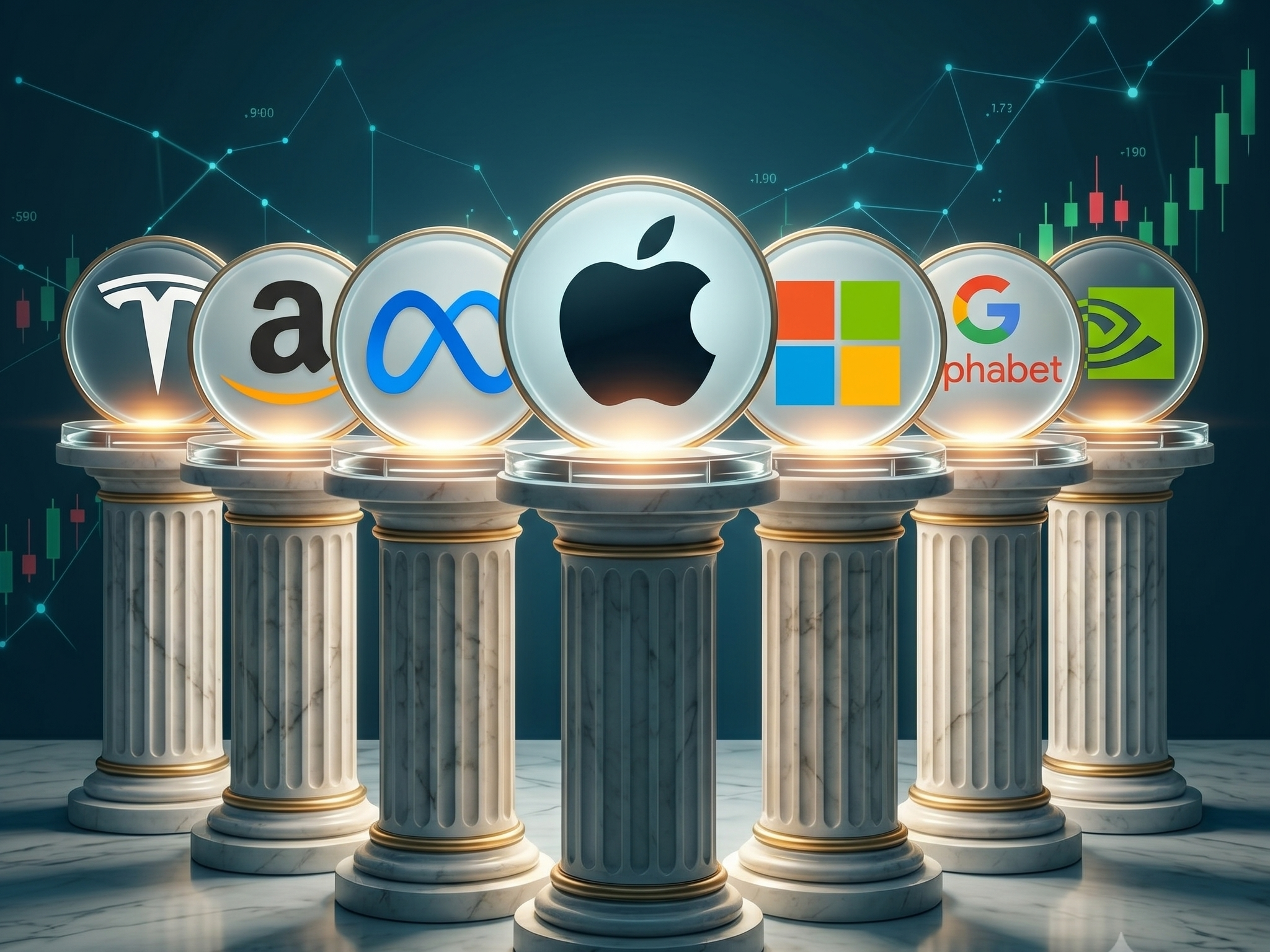
The overlap issue is not just geographic. It is also about concentration within the US itself.
The S&P 500 is market-cap weighted. That means the biggest companies get the biggest slice, and right now, the biggest companies are a group of seven mega-cap technology firms: Nvidia, Apple, Microsoft, Amazon, Alphabet (Google), Meta, and Tesla.
As of 8 April 2026, these seven stocks made up 32.3% of CSPX's entire weight, with Nvidia alone at 7.61% and Apple at 6.54%.
So when you buy both VWCE and CSPX, you are not just doubling your US exposure. You are doubling your exposure to this handful of tech giants specifically. If Nvidia or Apple have a bad year, your "diversified" portfolio will feel it hard. This is exactly what happened in early 2026, when the Magnificent 7 fell sharply and dragged the entire S&P 500 with them.
This is why overlap analysis matters. It is not just about countries. It is about what is hiding underneath the ticker symbol.
How to Check: What Is Actually New in Your Second ETF?
The right question to ask before adding any ETF is: how much of this do I already own?
The chart above shows the answer for the most popular UCITS ETFs a European investor might add to a VWCE base position, using April 2026 factsheet data:
CSPX (S&P 500) — approximately 60% overlap with VWCE. Only 40% is genuinely new exposure. You are mostly paying twice for the same US stocks.
SPPW (MSCI World, SPDR) — over 80% overlap. The MSCI World index is itself 72% US as of March 2026, making it almost completely redundant alongside VWCE.
MEUD (Euro Stoxx 300, Amundi) — only about 12% overlap. Europe is underweighted in VWCE, so a dedicated European ETF adds real diversification.
VFEM (Vanguard FTSE Emerging Markets UCITS ETF) — roughly 87% genuinely new exposure. Emerging markets are a small slice of VWCE, so this adds something real.
IQQQ (Nasdaq-100, iShares) — around 58% overlap, and it is the most dangerous kind: concentrated tech overlap that amplifies your Magnificent 7 bet directly.
The takeaway is clear: not all ETFs are equal in what they add to your portfolio. Two funds with different names can leave you nearly identical underneath.
The Cost Nobody Talks About
Overlap does not just cost you diversification. It costs you money.
Each ETF charges a TER (Total Expense Ratio). As of October 2025, Vanguard reduced VWCE's TER to 0.19% per year. CSPX charges 0.07%. If you hold both in a 50/50 split, you are paying a blended 0.13%, but for what? For roughly 60% of your CSPX allocation to duplicate what VWCE already does. You are literally paying to own the same stocks twice.
Over a 20 or 30-year investment horizon, that cost drag compounds silently. The smarter move is to either hold VWCE alone, or replace it entirely with CSPX if you deliberately want US concentration, not layer them on top of each other.
Three Signs You Have an Overlap Problem
You do not need specialist software to spot the warning signs. Look for these:
1. You own an All-World ETF plus a regional or country ETF.
VWCE already contains US, Europe, Japan, and Emerging Markets. Adding CSPX, IWDA (iShares MSCI World), or SPPW on top is nearly always redundant. Check the US weighting in your new ETF. If it is above 50%, assume significant overlap.
2. You own both an MSCI World fund and an S&P 500 fund.
MSCI World is over 72% US stocks as of March 2026. The S&P 500 is 100% US. These two funds have very high overlap. Many European investors hold both without realising it.
3. You added a thematic or sector ETF and it is heavy in tech.
ETFs like IQQQ (Nasdaq-100) or any AI or semiconductor thematic fund will stack directly on top of the tech exposure already inside VWCE and CSPX. You end up with Nvidia and Apple appearing three times across your portfolio.
What to Do Instead?

The goal of diversification is genuine independence between positions, assets that do not all move together. Here is how to think about building a non-overlapping European portfolio:
Start with one broad base. VWCE is a genuine all-in-one fund. For many investors, it is enough on its own. Adding a second fund only makes sense if it brings something VWCE does not already have.
Add ETFs that cover what VWCE underweights. Emerging markets (VFEM or IEMA), small-cap stocks (WSML, the iShares MSCI World Small Cap UCITS ETF), or dedicated European stocks are areas where a second ETF genuinely diversifies. These have low overlap and different return drivers.
Think in terms of factors, not just regions. Since you are already getting global market-cap exposure through VWCE, a second ETF could target a different factor, like dividends (VHYL, the Vanguard FTSE All-World High Dividend Yield UCITS ETF) or value (IWVL, the iShares Edge MSCI World Value Factor UCITS ETF). These add genuinely different risk and return characteristics rather than more of the same.
Use free tools to check before you buy. ETF Research Center (etfrc.com) lets you input two UCITS tickers and see exactly which holdings they share and at what weights. JustETF (justetf.com) shows the full breakdown of any ETF's geographic and sector allocation.
How to Run a Proper Overlap Check on Your Portfolio
Checking overlap manually is possible but slow. The systematic approach, the one that actually works, is to run your specific ETF combinations through a structured analysis that looks at:
Holdings overlap at the stock level
Factor overlap (are both funds tilted toward the same factors?)
Geographic concentration after combining weights
TER cost drag from redundancy
This is exactly what Prompt 12: ETF Overlap and Concentration Checker inside our ETF Investing Beginner's Pack walks you through, step by step, in plain language, using AI to do the analysis on your exact portfolio. You paste in your two ETF names and their weights, and you get a full breakdown of where the redundancy is, how concentrated you are, and what to do about it.
The pack also includes a prompt for European investors to check geographic exposure (Prompt 6) and hidden costs (Prompt 7), so you can audit your full portfolio, not just the overlap piece.
Because the most expensive mistake in investing is not picking the wrong ETF. It is thinking you are diversified when you are not.
The ETF Blueprint publishes research-grade content and AI prompt frameworks built specifically for EU retail investors navigating UCITS ETFs. All content is for educational purposes only and does not constitute financial, investment, tax, or legal advice.